Wednesday, October 13, 2021
We all have recurring problems during certain exercises à horse. From the horse that loads the bars to the horse that doesn't stay focused to the one that lies down in the curves, it's sometimes difficult to remedy.
That's why you'll find a new series of new series of blog articles to help you solve these problems.
Before moving on to solutions, always start by looking for the origin of the problem. Is it physical discomfort? Is it a mental block? After makingn addition to vet, osteo and dentist check-ups, you can also call in a saddle-fitter and bit-fitter to check that your equipment is well suited to your mount.
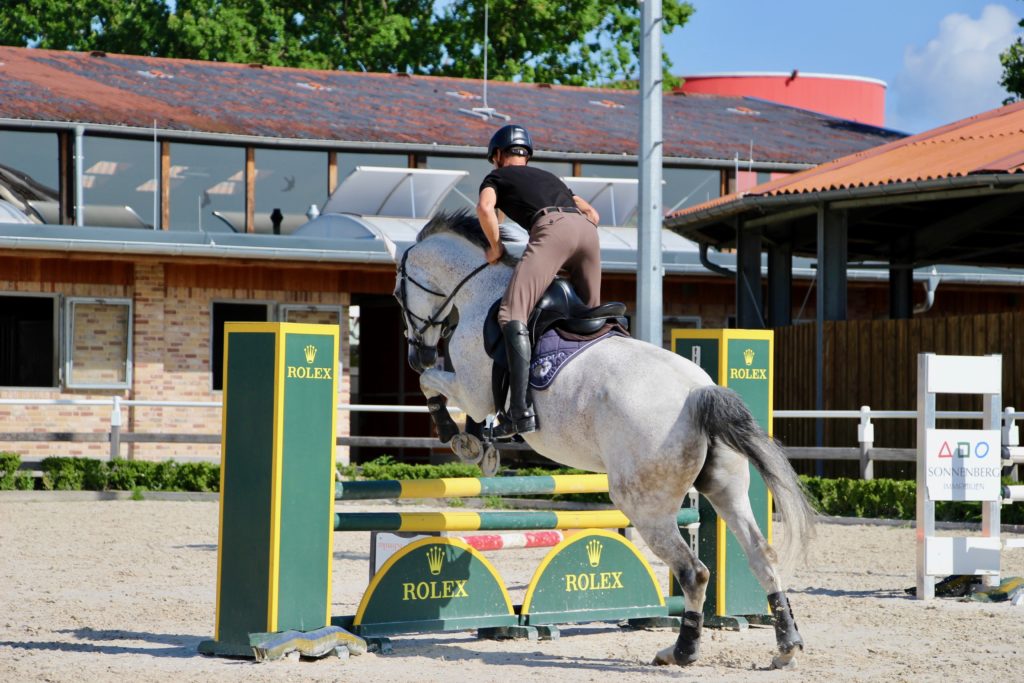
Céline, hunter coach in the Paris region:
« Deux types d’exercices sont à préconiser pour ces chevaux:
Work daily on ground bars to get the horse used to working on bars and make it a formality.
Focus on cadence and cadence and stride repetition. Teach your horse to respect stride contracts, even on ground bars.
Reduce speed. Jump from the trot, and even from the walk. This will force your horse to use his strength rather than his speed.
Use circles. Working with lots of curves and circles will put your horse back on its haunches and rebalance it. Don't go on to your next obstacle until your horse is calm on landing the first.
Comptez vos foulées. Utilisez les contrats de foulées pour vous forcer à tenir une cadence régulière. Un bon exercice est celui de travailler la souplesse et le rythme de son cheval à l’obstacle : il est à retrouver gratuitement sur l’application Seaver. »
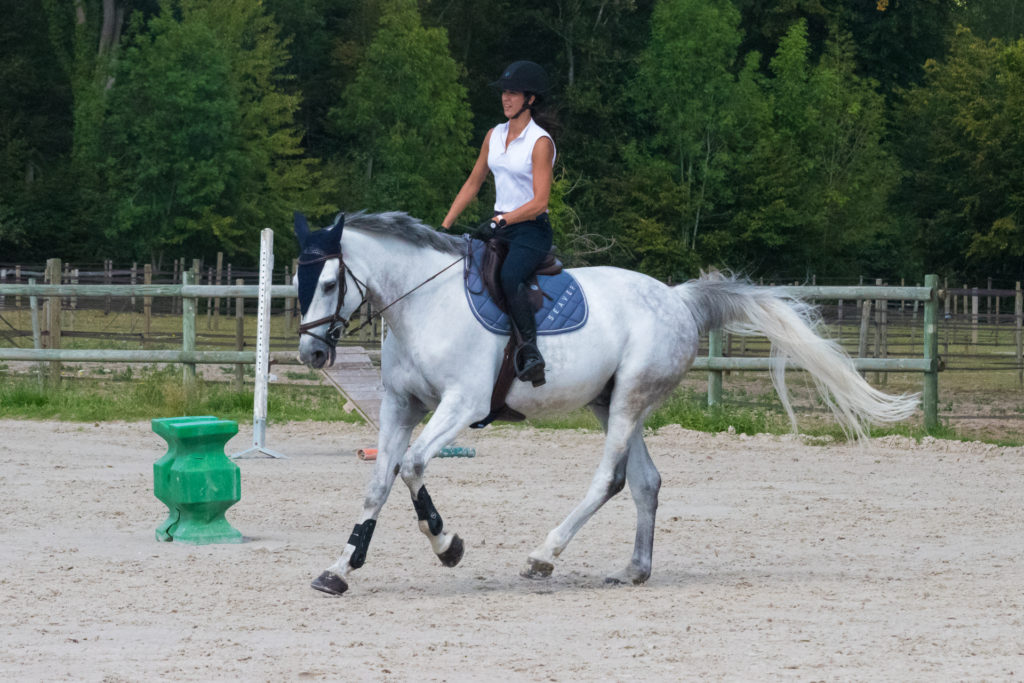
Jean-Jacques, dressage rider and coach:
« Plusieurs étapes sont à respecter pour pouvoir améliorer ce problème
Check your horse's orientation on the longe. Is it curved, counter-curved, stiff? Does it also lie down on foot, or is this a problem encountered only on horseback?
Have him make circle size variations. This will force him to stand on his own to prevent himself from falling.
Make lots of transitions between and within gaits. This will enable your horse to balance more and more on his hindquarters, and thus to lower himself on his hips.
This balance is what is sought in dressage, as it allows the horse's weight to pass underneath its mass and prevents it from fleeing forward.
First of all, you can repeat the same exercise as in a straight line.
One of your best allies will also be counter-incurvation. This will enable you to encourage the horse to rebalance itself, as it's a difficult position to maintain for horses with a tendency to lie down.
Ne travaillez pas que sur la contre-incurvation. Tout l’intérêt est de varier le pli pour laisser le cheval dans une zone « confortable » une fois que son équilibre vous convient. c’est le principe de l’approche-retrait. Lorsque le cheval commence à se déséquilibrer, basculez-le en pli externe. Dès lors qu’il revient à un équilibre convenable, revenez à une incurvation classique.
Vous pouvez également vous munir de barres au sol à mettre aux 4 « coins » du cercle pour obliger le cheval à faire attention à où il met les pieds, et donc le rééquilibrer naturellement. Cet exercice est également disponible sur l’application gratuite Seaver à retrouver juste ici.«

Aurélie, professional rider and breeder:
Above all, don't make your sessions too long ! This will be counter-productive, as you'll both be getting annoyed. It's better to keep your session as short as possible, so you can keep your horse with you as much as possible.
Vary your exercises ! We often get into the habit of working on a single exercise per session. The idea with young horses is to work on several exercises in one session. For example, you could select two and alternate between them.
Take a break ! When you feel you're losing your connection with your horse, it's best to take a break for a few minutes to clear his head before returning to work.
Keep him busy ! Don't give him time to think about anything else. You must constantly ask him for something to keep his attention on you.
Take him outside ! I like to take my young horses outside so that they can see something else, and so that they understand that the arena is a place of concentration, while the outside is a more playful place for them.
Installez une routine ! Toujours en rapport avec le point précédent, ce que je fais souvent est que je marche mon cheval à l’extérieur avant la séance, il peut alors regarder partout, faire sa vie etc. Ensuite seulement je viens débuter ma détente en carrière, et avec le temps, il a associé la carrière avec le travail. »
What issues would you like us to address in our next advice article?
Please let us know in the comments so that we can help you.