


Wednesday, April 29, 2026
Regaining confidence on horseback after a fall, an accident, or a negative experience is a challenge many riders face throughout their riding careers, whether they are amateurs or elite riders. Because no, fear isn’t limited to beginners or those at the lowest levels. Overcoming it isn’t just a matter of courage, but a genuine process that requires a combination of mental strength, a gradual approach, and a reassuring environment to be successful.
In this article, we’ll explore the key elements for regaining a sense of calm and enjoyment in the saddle, by combining mental preparation, an understanding of mental blocks, and the role of equipment.
A fall or an accident can have a lasting psychological impact on a rider. The body remembers, and reflexes controlled by our subconscious or the nervous system become ingrained.
When we’re afraid—whether we’re aware of our apprehension or not—the horse immediately senses the tension reflected in our posture and body language. This can even become a vicious cycle that’s hard to break: a tense rider makes the horse more nervous, which in turn intensifies the rider’s apprehension.
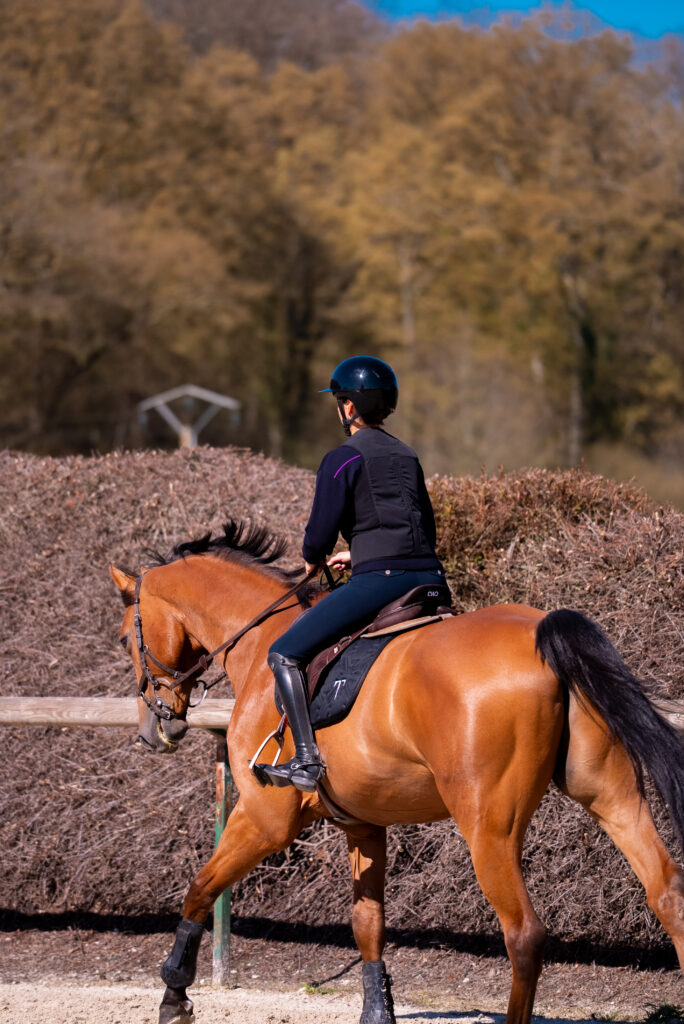
It is estimated that nearly 80% of riders have experienced a loss of confidence after a negative experience.
In France, more than 6,000 hospitalizations related to falls from horseback are reported each year, of which 37% involve the chest and 25% the head. Horseback riding is the fourth most accident-prone sport in France , with an average of 13 deaths per year, which naturally amplifies the fear of trying it again.
The result: a less fluid riding posture, a diminished connection with the horse… and a gradual loss of enjoyment.
A loss of trust is never due to a single factor. It is often the result of multiple factors.
Among the main obstacles:
Identifying these obstacles is an essential step. A study on mental preparation shows that 70% of riders improve their confidence by explicitly naming them, and 65% of athletes who use visualization significantly reduce their anxiety.
In the world of horseback riding, the mind plays a central role.
Mental preparation isn't a luxury—it's a necessity. It helps manage emotions, stress, and concentration, as specialized coaches point out.Six key techniques stand outfor rebuilding confidence:
These tools gradually help restore a sense of trust and connection with the horse.
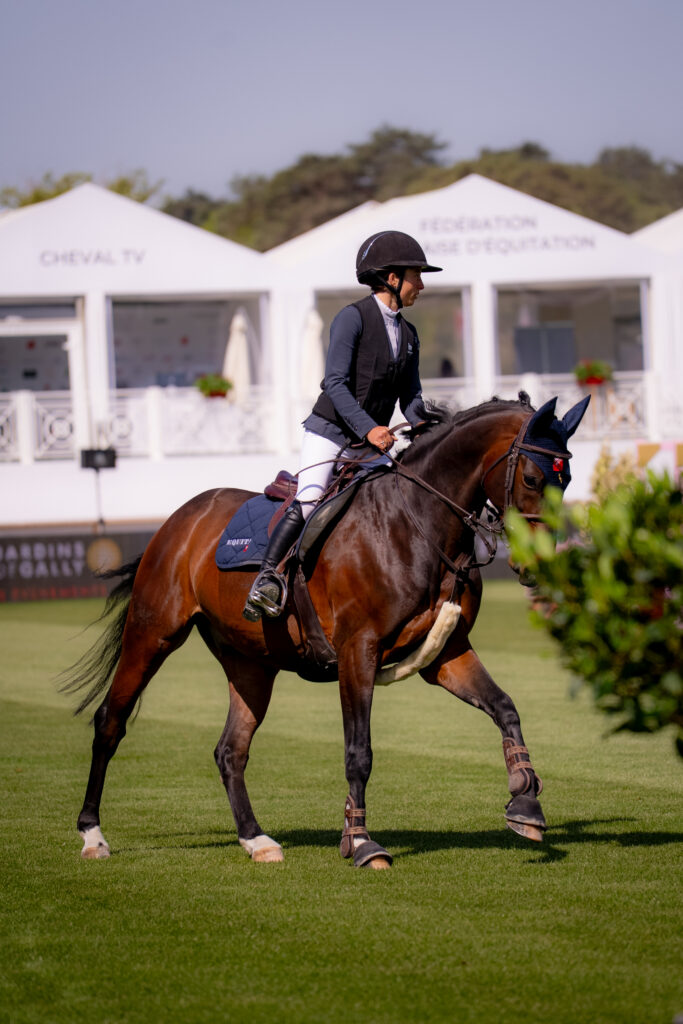
Regaining confidence often means that you can't immediately return to your original level. Instead, progress must be built step by step.
When fear holds us back from getting back in the saddle, one of the first approaches to consider is working on foot to rebuild a connection with the horse without pressure. Next, short sessions in a closed arena with a suitable horse allow you to gradually regain your confidence.
A phased approach could be considered:
With this approach, nearly 90% of riders regain a smooth riding style within a few weeks, compared to only 45% without structured guidance—provided they proceed at their own pace.
Once you’re mentally prepared, your gear acts as a psychological safety net. It frees your mind to focus on making progress rather than on the risk. Falls account for 83% of riding accidents, with 37% of injuries involving the chest.
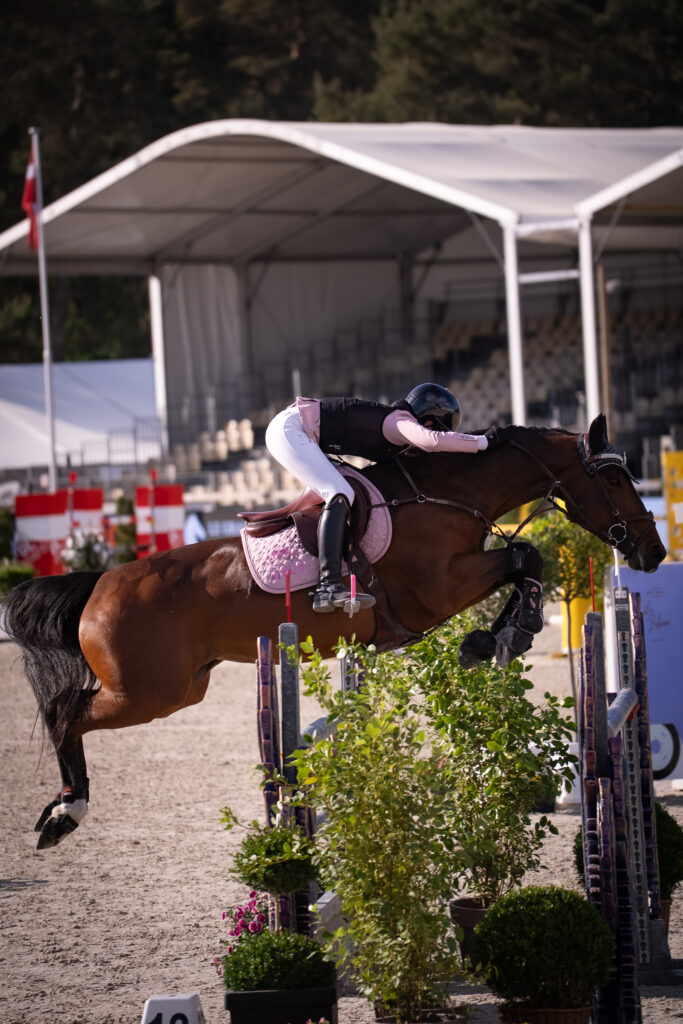
Confidence isn’t a static state—it’s a daily practice.Combine a focused mindset with reliable equipment to turn fear into confidence. By combining these approaches, 82% of riders return to their pre-fall level in less than 2 months.
Confidence is rebuilt through a sharp mind, a step-by-step approach, and equipment that instills confidence.
Sources :
https://blog.laselleriefrancaise.com/post/general/nombre-de-mort-equitation-par-an-en-france
https://madbarn.ca/fr/peur-de-monter-a-cheval-apres-blessure
https://lacademie-de-la-haute-performance.com/preparation-mentale-equitation
https://www.cavalons.fr/blog/securite-a-cheval-chiffres-exemples-et-conseils-concrets