


Tuesday, July 28, 2026
There's a lot of talk about safety in horseback riding, but it's rarely measured.
To fill this gap, we surveyed the equestrian community, without holding back. We asked them to share their experiences with risk, their beliefs, and to tell us about their protective gear. 2,333 riders responded: experienced enthusiasts, mostly young, who ride often and know the terrain.
Here's what they taught us:
This figure says it all: 96.8% of respondents have been in a riding accident at some point. So this isn't just a theoretical risk—it's an experience shared by virtually all riders.
And these accidents take their toll. Among riders who have been in accidents, nearly 1 in 2 has suffered an injury that required them to stop riding (48%), more than 1 in 4 has been hospitalized following a fall (28%), and 12% suffer lasting effects from a fall. Falls at jumps account for the vast majority of falls (86%), followed by falls on the flat (58%) and falls during outdoor rides (36%).
The areas most commonly affected are: the back (44%), the head and concussions (41%), followed by the limbs and the neck (around 31% to 33%). In other words, the torso and the head—precisely the areas that helmets and airbags are designed to protect. It is no coincidence that 73% of accident victims believe that better safety equipment could have reduced their injuries.
Good news: riders believe that progress is being made. 80% believe equestrian sports are safer than they used to be. The changes in attitudes, standards, and equipment are being recognized and welcomed.
But when we look at the individual level, the picture changes. When asked to rate their own sense of safety on a scale of 1 to 5, they average a score of 3.62. And most importantly: only 9.7% feel completely safe. Even experienced and well-equipped riders remain acutely aware of their vulnerability and the risks inherent in their sport. This is undoubtedly what drives them to take action: 62% have changed the way they ride after a fall.
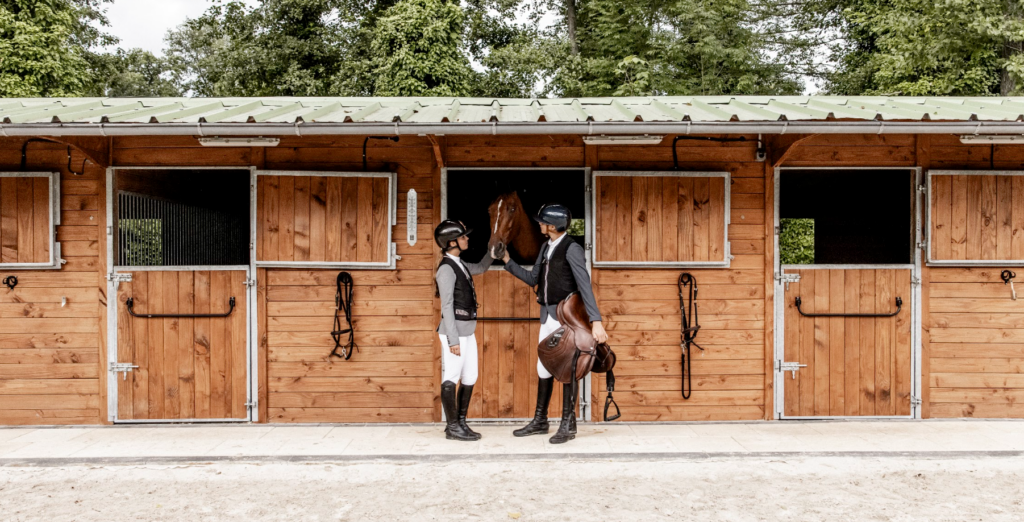
When it comes to safety gear, we’ve made progress: 97% of the riders surveyed always wear a helmet when riding. It has become second nature, especially among the youngest riders.
But wearing a helmet isn’t everything. A helmet that has absorbed an impact—or that has aged—no longer provides the same level of protection. Yet 22.1% of riders don’t replace it until after a fall, and 9% have never replaced it. When it comes to replacing helmets, education still has a real role to play.
The same logic applies to safety stirrups: 83% recognize their benefits, but only 1 in 2 riders uses them (53%). The gap between belief and adoption remains a key area for prevention efforts.
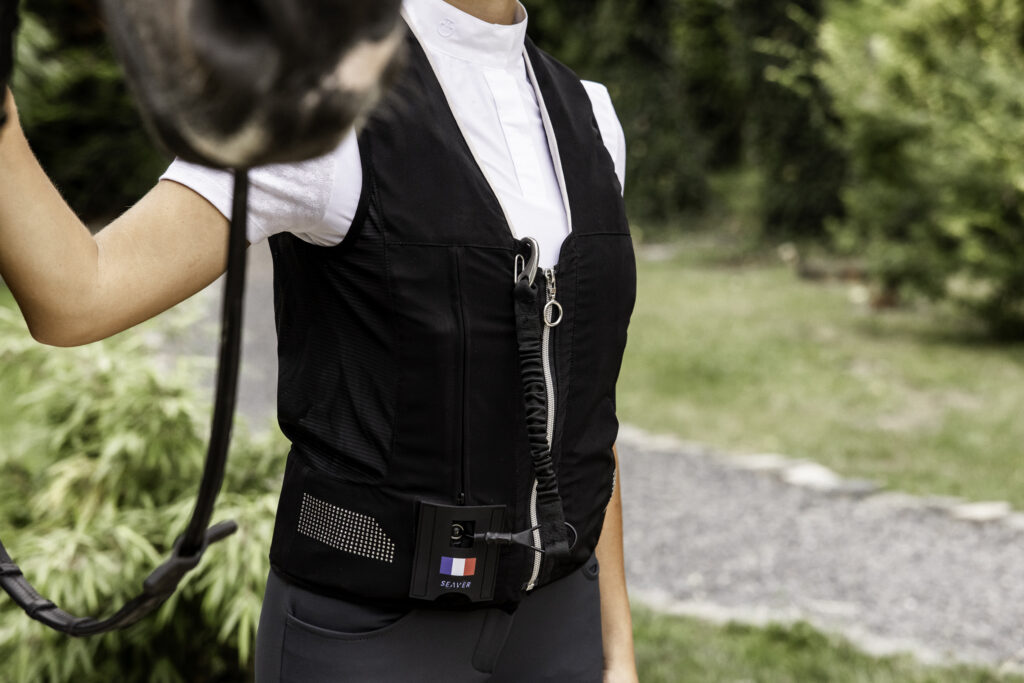
This is the most striking finding of the study. The equestrian airbag is no longer just a gadget for early adopters: 73% of respondents already use it, including 46% who use it daily. Better yet, 94% consider it “indispensable, ” and barely 0.7% consider it useless.
The nature of the debate has changed. The question is no longer “Should we use an airbag?” but “How should it be worn, and in what context?” The responses point to a range of uses that extends far beyond competition: over jumps (59%), in competition (48%), but also on young horses (39%) and all the time (38%).
When riders are asked what factors guide their choice of safety gear, the ranking is clear: protection (92%), comfort (60%), and freedom of movement (58%). Price comes in fourth place, with design and technology ranking even lower.
And at the very bottom of the table? Brand image: 0.6%. The message is clear. In the world of safety, trust can’t be bought through marketing—it’s earned through the product itself, its actual protection, the comfort it provides while riding, and the freedom of movement it offers.
A discerning community—most of whom have already suffered injuries—that is convinced their sport is progressing but is aware of its own risks. A universal helmet that hasn’t been updated effectively. An airbag that has become the standard. And riders who choose their protective gear based on how it performs, not on the label.
That is exactly the philosophy that has guided Seaver from day one: safety that you don’t even notice while riding—lightweight, certified, and designed to be worn every day, not just on competition days.
78% of the riders surveyed requested the full results of this study. The detailed report is available for download: all data, all charts, and all key findings.
https://seaverhorse.com/Enquete-sur-la-securite-Seaver-juillet-2026.pdf